
Creative Mindset: A Simple Guide to a Creative Mindset
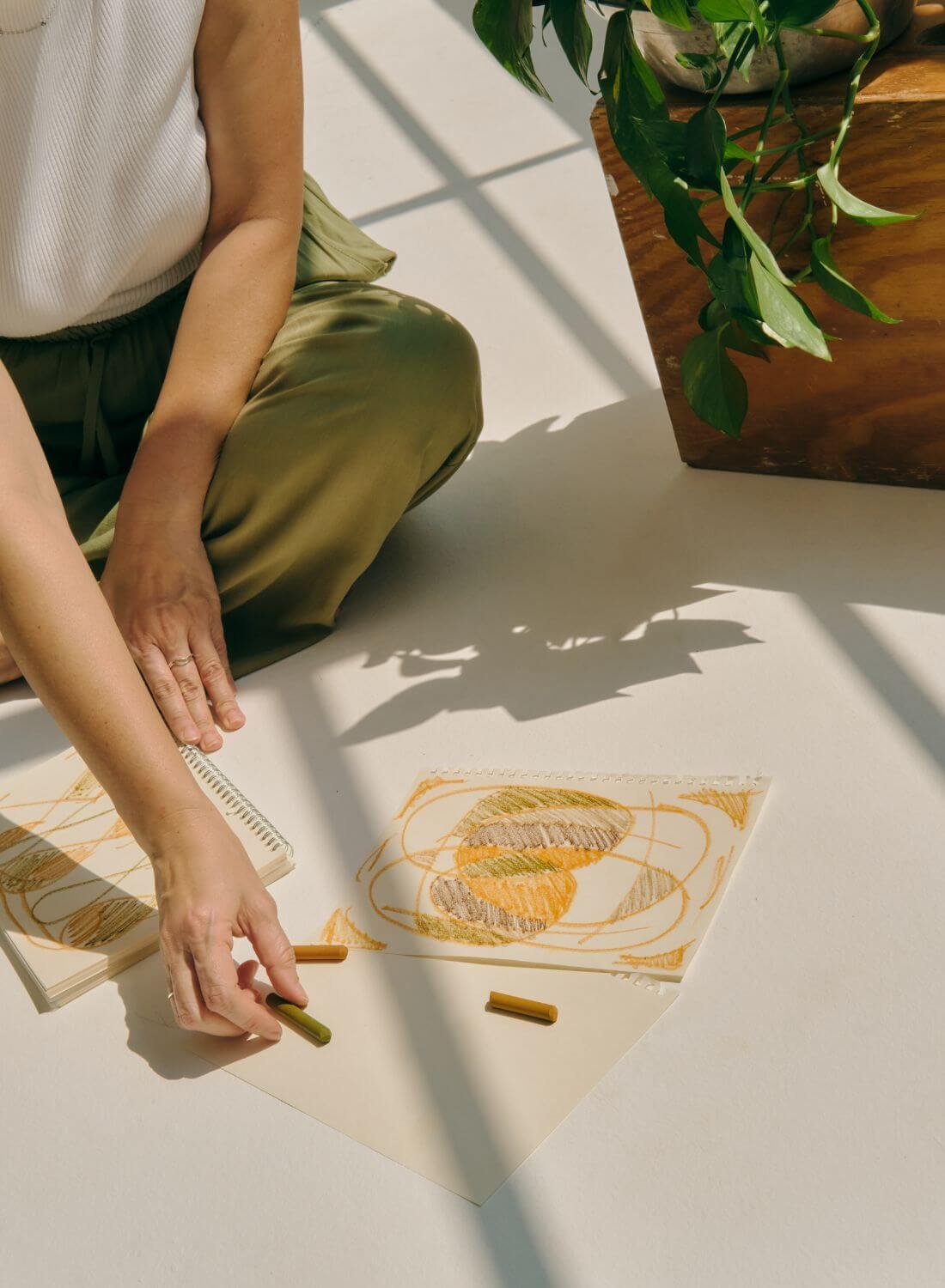
Having a creative mindset means living with a mindset that allows you to think, feel, and express yourself creatively, and doing so consistently. It’s a way of viewing the world with curiosity and possibility.
In short, a creative mindset is a curious mindset that leads to trying things, things that include mistakes. Not just thinking creatively, but being creative.
This guide is to help you become aware of, and perhaps question, your current mindset. This isn’t about being bad at creativity, or some other shaming fest.
It’s definitely possible to change your mindset, maybe not in the next minute or two, but the energy you carry and create has a lot to do with the outcome of your day, so this guide is meant as a help for you to practice.
These 4 suggestions are not scientifically backed, they are based on my personal experience as a creator and as a creativity coach.
What is a mindset?
According to the dictionary, a mindset is the established set of attitudes held by someone.
Wikipedia says mindset is a set of assumptions, methods, or notations held by one or more people. It can also be a person's worldview or philosophy of life.
You have probably heard of a fixed mindset and a growth mindset.
A fixed mindset is when you believe your qualities are what you are born with and are not changeable. It is what it is. You are who you are.
A growth mindset is the opposite. If you believe you can change and learn new abilities with work, then you have a growth mindset.
It’s not like if you have a growth mindset, then you always do. You can easily go between being fixed and openminded about something. It very much depends on the topic and situation.
“I believe that every innovative thought comes from a creative mindset.....A creative mindset is what drives our world, and art is the base of that.”
Why your mindset matter creatively
Your mindset plays a huge role in how you live your life and how you cope with life’s challenges. In this article, Carol Dweck explains from her studies on mindsets, that people with a fixed mindset tend to look for other people’s approval. They also tend to be less resilient and throw in the towel more often when things get tough.
Your mindset matters because it’s the foundation of how you see yourself and others. How you deal with problems and challenges at work, and at home, depends a lot on your mindset.
As well as a fixed mindset and growth mindset, you can also have a creative mindset, which is super useful when you want to do creative work.
Your process of creation will be annoyingly difficult at times, and that is whether you work alone or with others, and how you handle this will have a lot to do with your attitude, and your willingness to be open to solutions.
A simple guide to a creative mindset
Tip 1: Embrace making mistakes
Make mistakes on purpose. Seriously!
You might this is a bit ridiculous, ‘cause why make mistakes if you can avoid them?
This is the thinking you’ve been trained to think. In school and society.
A creative mindset is about exploring and trying new things, seeing new connections. If you’re afraid to make mistakes you won’t go where you need to go.
The fear of what’ll happen if you make a mistake will hold you back.
Mistakes are not your enemy. They are just a way of not doing something.
Train yourself to say you love mistakes. Write in big letters “I love mistakes” on a piece of paper and hang it where you can see it.
If you think this sounds unserious, and flimsy, you’d be right.
It’s a way of taking the seriousness out of mistakes. Hello being human!
The fear of being pulled up, even shamed, for making mistakes is real. There are bosses who are such a-holes, that employees walk on eggshells out of fear of making mistakes.
So, I know it’s not as easy as saying “just embrace mistakes”, but a creative mindset will be pulled to do the thing anyway, and expect mistakes to be made.
A great practice line is saying “Great, that didn’t work, now I know. On to the next thing.”
If you train yourself to like mistakes, and you expect to make mistakes, then they won’t feel as scary and they won’t stop you from being creative.

Tip 2: Be silly, use your sense of humor.
A creative mindset is probably best compared with playfulness. We assume kids are more creative than adults, because they are good at playing. Everything is play, imagination, and pretending, as kids.
They will give it a go, when they don’t know something, which is most things.
If being silly is a step too far out of your comfort zone, you can practice lightening up a little, by doing something just for fun. For no reason at all, but just because.
Have no goal, no intention to do it well, don’t show it anybody, just do something random, because you feel like doing it.
Play “I spy with my little eye” when you’re driving. Make up fun stories about random people you see on the street, draw with your non-dominant hand, or upside down.
As well as filling you with light and joyful energy, being silly relaxes the fight/flight/freeze part of your brain, which gives you access to the more creative part of your brain.
If you ever needed a science reason to have fun, there it is! :)
Question to ask:
What is one small way I can make this work more fun?
Tip 3: Follow your curiosity
Every day quickly comes to look the same. Today is like yesterday and the day before. 40% - 90% of your life is lived by habit, and we love habits, but this is why having a creative mindset means you have to seek a way to bring new into your life.
What are you curious about? When was the last time you felt curious about something?
Are there topics, subjects, jobs, or ideas you think are a little interesting? Are there times when you watch something on the telly or hear someone talk about a subject and you light up?
You don’t have to change everything about your life to follow your curiosity. Next time you speak to someone, you can simply ask them to tell you more about themselves. You can ask how they pick the plants they have in their garden or what they like best about their job. Little things.
You can try and finish these sentences:
I wonder what it would be like to know ………….?
I wonder what I could do, if I knew how to ….
Go down the path less traveled
A creative mindset is about going down the path less traveled in your brain.
The more pathways you have created in your brain, the easier the task is. This is also a habit. As you can imagine your brain is full of millions of small pathways.
The more you do one thing, the bigger those pathways become until it eventually become a highway. This is how habits are formed. Something you do so often it doesn’t take much thinking on your part.
What you want to do, to practice a creative mindset, is to go down the path less traveled.
Try new things. Make new connections, put new things together, and see things from a different angle. Go a different way. Make it your mission to find 3 different routes to work and take turns using them.
Do you go the same route when food shopping? Try a different way around the aisles. I drive my husband mad, as I’m all over the place, and he walks the same up-and-down route every time.
Questions to ask:
What is one thing I would do differently if I wasn’t afraid of what people would say?
What is a different way I can look at my work?
As you’re reading this post, I’m guessing you’re an open-minded person interested in doing work creatively, so you’re probably alright in the mindset department.
But if you did get something useful from this post, I’d love for you to get my emails too. That’s a place I share most of the joys and frustrations of working creatively consistently.
